
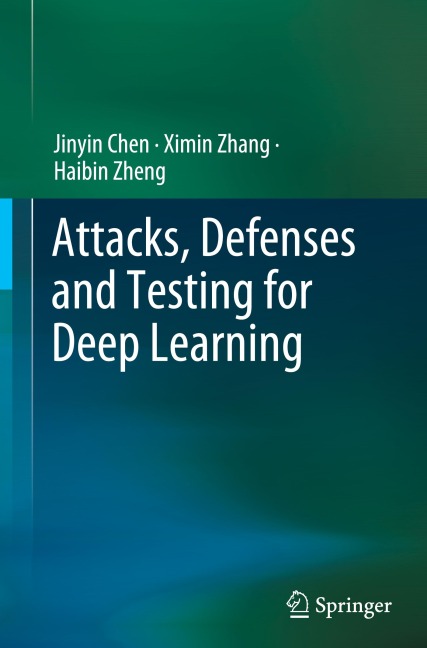
Attacks, Defenses and Testing for Deep Learning - Ximin Zhang,Haibin Zheng,Jinyin Chen
-25% koodilla BOOKS
Toimitus 17-23 arkipäivässä
30 päivän palautusoikeus
This book provides a systematic study on the security of deep learning. With its powerful learning ability, deep learning is widely used in CV, FL, GNN, RL, and other scenarios. However, during the process of application, researchers have revealed that deep learning is vulnerable to malicious attacks, which will lead to unpredictable consequences. Take autonomous driving as an example, there were more than ... Täydellinen kuvaus
Saatat myös pitää
 TOP
TOP

Determined: The Science of Life Without Free Will
-25% koodilla BOOKS
Toimittajalla varastossa
 TOP
TOP

The Rise and Fall of the Dinosaurs: A New History of a Lost World
-25% koodilla BOOKS
Toimittajalla varastossa
TOP

Factfulness: Ten Reasons We're Wrong About the World--and Why Things Are Better Than You Think
Ola Rosling, Anna Rosling Rönnlund, Hans Rosling
-25% koodilla BOOKS
Toimittajalla varastossa
TOP

Biology: A Global Approach, Global Edition
Neil Campbell, Rebecca Orr, Lisa Urry, Peter Minorsky, Michael Cain, Jane Reece, Steven Wasserman
-25% koodilla BOOKS
Toimittajalla varastossa
TOP

Six Not-so-easy Pieces: Einstein's Relativity, Symmetry, and Space-Time
Richard P. Feynman, Robert B. Leighton, Matthew Sands
-25% koodilla BOOKS
Toimittajalla varastossa
TOP

Entangled Life: How Fungi Make Our Worlds, Change Our Minds and Shape Our Futures
-25% koodilla BOOKS
Toimittajalla varastossa
TOP

The Light Eaters: How the Unseen World of Plant Intelligence Offers a New Understanding of Life on Earth
-25% koodilla BOOKS
Toimittajalla varastossa
TOP


The Age of Alchemy: How Early Innovators Shaped Modern Chemistry
-25% koodilla BOOKS
Toimittajalla varastossa
TOP
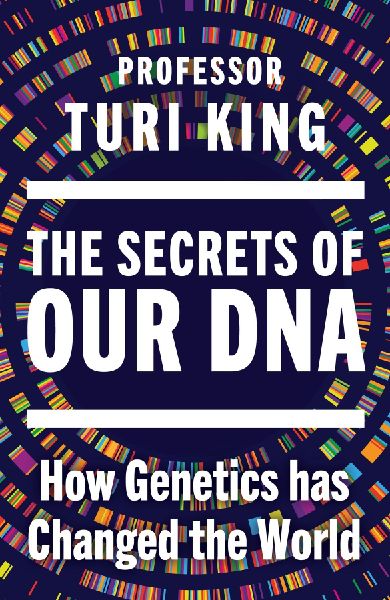
The Secrets of our DNA: How Genetics has Changed the World
-25% koodilla BOOKS
Toimittajalla varastossa
TOP

Janeway's Immunobiology
Leslie J. Berg, Kenneth Murphy, Casey Weaver
-25% koodilla BOOKS
Toimittajalla varastossa
TOP
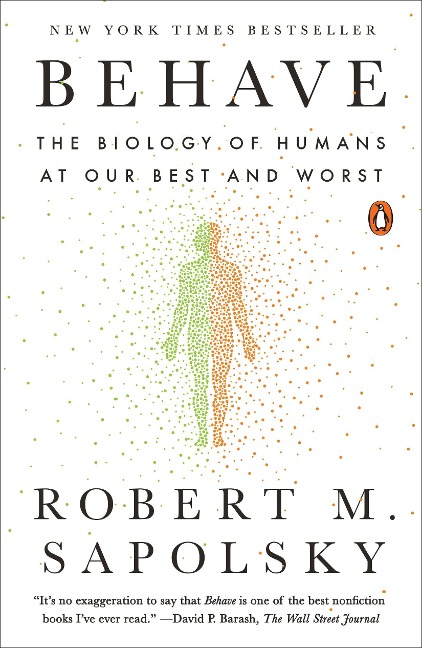
Behave: The Biology of Humans at Our Best and Worst
-25% koodilla BOOKS
Toimittajalla varastossa
TOP

Why We Sleep: Unlocking the Power of Sleep and Dreams
-25% koodilla BOOKS
Varastossa
TOP
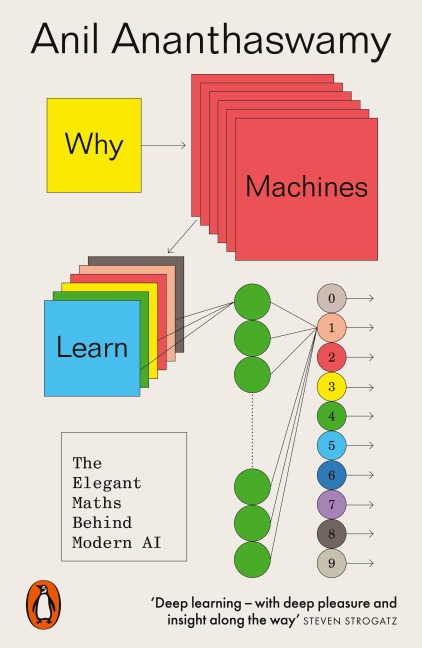
Why Machines Learn: The Elegant Maths Behind Modern AI
-25% koodilla BOOKS
Toimittajalla varastossa
TOP

Life As No One Knows It: The Physics of Life's Emergence
-25% koodilla BOOKS
Toimittajalla varastossa
TOP

The Rise and Reign of the Mammals: A New History, from the Shadow of the Dinosaurs to Us
-25% koodilla BOOKS
Toimittajalla varastossa
TOP
Learn Faster, Perform Better: A Musician's Guide to the Neuroscience of Practicing
-25% koodilla BOOKS
Toimittajalla varastossa
TOP
The Brain That Changes Itself: Stories of Personal Triumph from the Frontiers of Brain Science
-25% koodilla BOOKS
Toimittajalla varastossa
 TOP
TOP

How to Solve it: A New Aspect of Mathematical Method
-25% koodilla BOOKS
Toimittajalla varastossa
Kuvaus
This book provides a systematic study on the security of deep learning. With its powerful learning ability, deep learning is widely used in CV, FL, GNN, RL, and other scenarios. However, during the process of application, researchers have revealed that deep learning is vulnerable to malicious attacks, which will lead to unpredictable consequences. Take autonomous driving as an example, there were more than 12 serious autonomous driving accidents in the world in 2018, including Uber, Tesla and other high technological enterprises. Drawing on the reviewed literature, we need to discover vulnerabilities in deep learning through attacks, reinforce its defense, and test model performance to ensure its robustness. Attacks can be divided into adversarial attacks and poisoning attacks. Adversarial attacks occur during the model testing phase, where the attacker obtains adversarial examples by adding small perturbations. Poisoning attacks occur during the model training phase, wherethe attacker injects poisoned examples into the training dataset, embedding a backdoor trigger in the trained deep learning model. An effective defense method is an important guarantee for the application of deep learning. The existing defense methods are divided into three types, including the data modification defense method, model modification defense method, and network add-on method. The data modification defense method performs adversarial defense by fine-tuning the input data. The model modification defense method adjusts the model framework to achieve the effect of defending against attacks. The network add-on method prevents the adversarial examples by training the adversarial example detector. Testing deep neural networks is an effective method to measure the security and robustness of deep learning models. Through test evaluation, security vulnerabilities and weaknesses in deep neural networks can be identified. By identifying and fixing these vulnerabilities, the security and robustness of the model can be improved. Our audience includes researchers in the field of deep learning security, as well as software development engineers specializing in deep learning.
Lisätietoja
| Kirjoittaja | Ximin Zhang, Haibin Zheng, Jinyin Chen |
|---|---|
| Julkaisija | Springer Nature Singapore |
| Julkaisuvuosi | 2024 |
| Kannen tyyppi | Kovakantinen |
| EAN | 9789819704248 |