
Boundary-Scan Test: A Practical Approach - Peter van den Eijnden,Frans de Jong,Harry Bleeker

-35% koodilla BOOKS
Toimitus 17-23 arkipäivässä
30 päivän palautusoikeus
The ever-increasing miniaturization of digital electronic components is hampering the conventional testing of Printed Circuit Boards (PCBs) by means of bed-of-nails fixtures. Basically this is caused by the very high scale of integration of ICs, through which packages with hundreds of pins at very small pitches of down to a fraction of a millimetre, have become available. As a consequence the trace distance ... Täydellinen kuvaus
Saatat myös pitää

 TOP
TOP

INCOSE Systems Engineering Handbook
-35% koodilla BOOKS
Toimittajalla varastossa
TOP

If Anyone Builds It, Everyone Dies: The Case Against Superintelligent AI
Eliezer Yudkowsky, Nate Soares
-35% koodilla BOOKS
Toimittajalla varastossa
 TOP
TOP
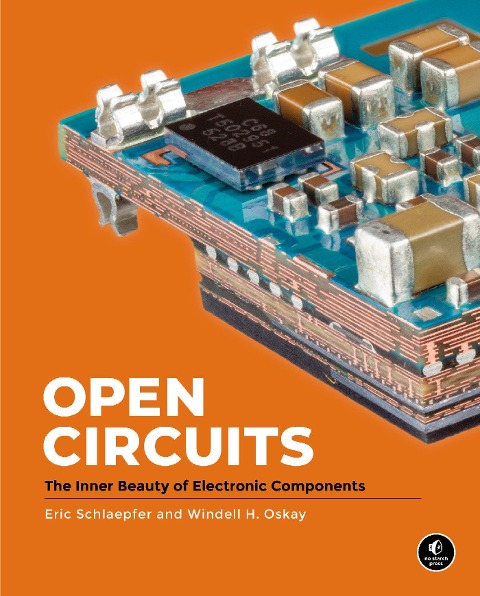
Open Circuits: The Inner Beauty of Electronic Components
Eric Schlaepfer, Windell Oskay
-35% koodilla BOOKS
Toimittajalla varastossa
TOP
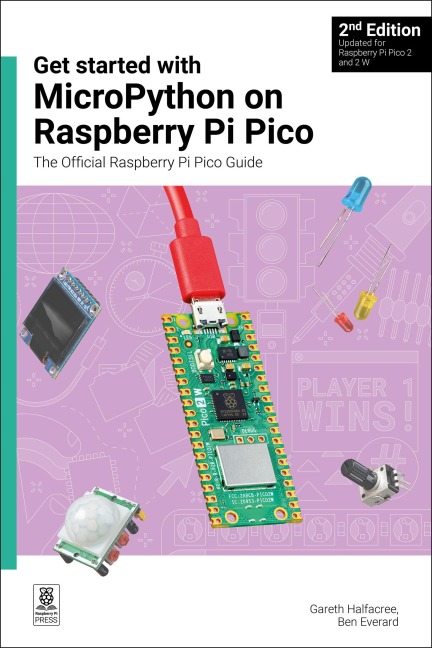
Get started with MicroPython on Raspberry Pi Pico: The Official Raspberry Pi Pico Guide
-35% koodilla BOOKS
Toimittajalla varastossa
TOP


We Are Not Machines: The Fight for the Future of Work
-35% koodilla BOOKS
Toimittajalla varastossa
TOP

Foundations of Flavor: The Noma Guide to Fermentation: Including Step-By-Step Information on Making and Cooking with: Koji, Kombuchas, Shoyus, Misos, Vinegars, Garums, Lacto-Ferments and black Fruits Vegetables
-35% koodilla BOOKS
Toimittajalla varastossa
TOP

Nucleo Boards Programming with the STM32CubeIDE: Hands-on in more than 50 projects
-35% koodilla BOOKS
Toimittajalla varastossa
TOP

Data-Driven Science and Engineering: Machine Learning, Dynamical Systems, and Control
Steven L. Brunton, J. Nathan Kutz
-35% koodilla BOOKS
Toimittajalla varastossa
TOP

Black Holes: The Key to Understanding the Universe
-35% koodilla BOOKS
Toimittajalla varastossa
TOP

Practical Electronics for Inventors
-35% koodilla BOOKS
Toimittajalla varastossa
TOP

Flowers For Algernon: A Modern Literary Classic
-35% koodilla BOOKS
Toimittajalla varastossa
TOP

Human Compatible: Artificial Intelligence and the Problem of Control
-35% koodilla BOOKS
Toimittajalla varastossa
TOP

How To Read Water: Clues & Patterns from Puddles to the Sea
-35% koodilla BOOKS
Toimittajalla varastossa
TOP
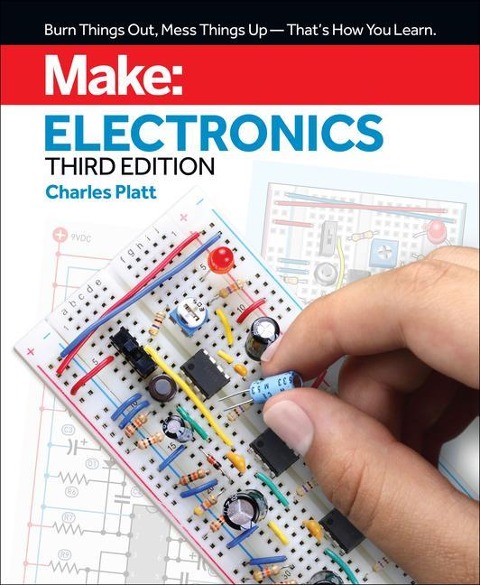
Make: Electronics: Learning by Discovery: A hands-on primer for the new electronics enthusiast
-35% koodilla BOOKS
Toimittajalla varastossa
TOP

Mastering the Arduino Uno R4: Programming and Projects for the Minima and WiFi
-35% koodilla BOOKS
Toimittajalla varastossa
TOP

The Idea Factory: Bell Labs and the Great Age of American Innovation
-35% koodilla BOOKS
Toimittajalla varastossa
TOP

Fundamentals of Aerodynamics ISE
Christopher Cadou, John D. Anderson
-35% koodilla BOOKS
Toimittajalla varastossa
TOP

Foundation Design and Construction
-35% koodilla BOOKS
Toimittajalla varastossa
Kuvaus
The ever-increasing miniaturization of digital electronic components is hampering the conventional testing of Printed Circuit Boards (PCBs) by means of bed-of-nails fixtures. Basically this is caused by the very high scale of integration of ICs, through which packages with hundreds of pins at very small pitches of down to a fraction of a millimetre, have become available. As a consequence the trace distances between the copper tracks on a printed circuit board cmne down to the same value. Not only the required small physical dimensions of the test nails have made conventional testing unfeasible, but also the complexity to provide test signals for the many hundreds of test nails has grown out of limits. Therefore a new board test methodology had to be invented. Following the evolution in the IC test technology. Boundary-Scan testing hm; become the new approach to PCB testing. By taking precautions in the design of the IC (design for testability), testing on PCB level can be simplified 10 a great extent. This condition has been essential for the success of the introduction of Boundary-Sc,m Test (BST) at board level.
Lisätietoja
| Kirjoittaja | Peter van den Eijnden, Frans de Jong, Harry Bleeker |
|---|---|
| Julkaisija | Springer US |
| Julkaisuvuosi | 1992 |
| Kannen tyyppi | Kovakantinen |
| EAN | 9780792392965 |