
Does Anger Influence Accentuation? - Fatma Polat
-35% koodilla BOOKS
Toimitus 12-18 arkipäivässä
30 päivän palautusoikeus
Seminar paper from the year 2016 in the subject English Language and Literature Studies - Linguistics, grade: 1,3, University of Tubingen, language: English, abstract: In linguistics, there are only few studies that investigate the correlation between emotion and language since language and cognition were treated as autonomous systems. One of the few books that puts an emphasis on this topic and analyses it ... Täydellinen kuvaus
Saatat myös pitää
 TOP
TOP
Technisches Wörterbuch für die Luftfahrt
-35% koodilla BOOKS
Toimittajalla varastossa
TOP
Technisches Wörterbuch für die Luftfahrt: Englisch - Deutsch
-35% koodilla BOOKS
Toimittajalla varastossa
TOP
Talk To Me In Korean Workbook - Level 1: New Edition
-35% koodilla BOOKS
Toimittajalla varastossa
TOP
The Elements of Style - Illustrated
-35% koodilla BOOKS
Toimittajalla varastossa
TOP
The Elements of Eloquence: How To Turn the Perfect English Phrase
-35% koodilla BOOKS
Toimittajalla varastossa
TOP
Solutions: Elementary: Student's Book
-35% koodilla BOOKS
Toimittajalla varastossa
TOP

Sejong Korean Vocabulary and Grammar 1A
-35% koodilla BOOKS
Toimittajalla varastossa
 TOP
TOP
Talk To Me In Korean - Level 1
-35% koodilla BOOKS
Toimittajalla varastossa
TOP
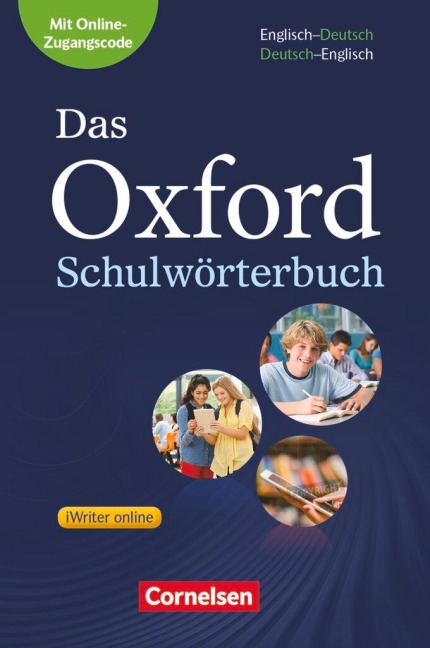
Das Oxford Schulwörterbuch A2-B1: Englisch - Deutsch / Deutsch - Englisch
-35% koodilla BOOKS
Toimittajalla varastossa
TOP
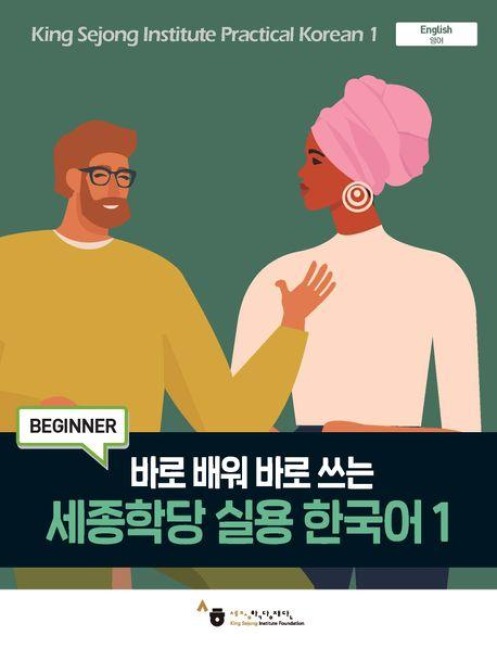
King Sejong Institute Practical Korean 1 Beginner: MP3 Audio Download
-35% koodilla BOOKS
Toimittajalla varastossa
TOP


Rare Tongues: The Secret Stories of Hidden Languages
-35% koodilla BOOKS
Toimittajalla varastossa
TOP
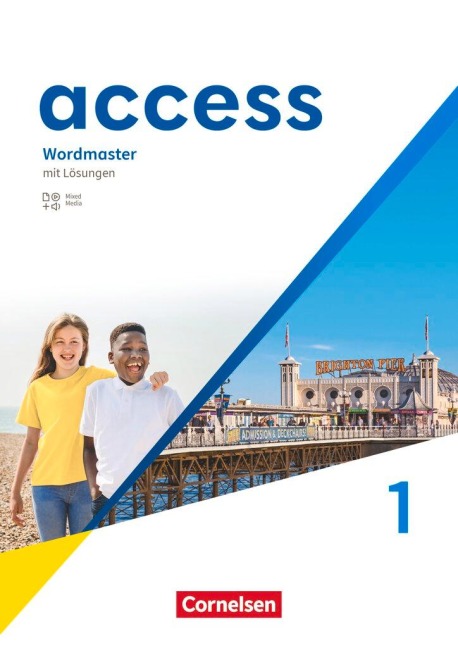
Access Band 1: 5. Schuljahr - Wordmaster - Vokabellernbuch
-35% koodilla BOOKS
Toimittajalla varastossa
TOP
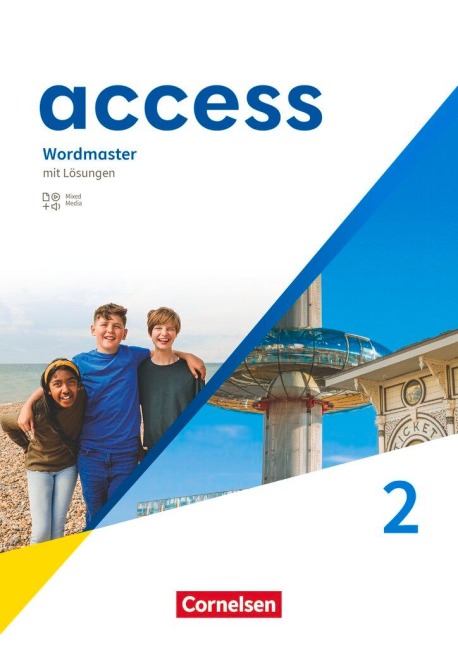
Access Band 2: 6. Schuljahr - Wordmaster - Vokabellernbuch
-35% koodilla BOOKS
Toimittajalla varastossa
TOP
Destination B2. Grammar; Vocabulary / Student's Book with Key
Steve Taylore-Knowles, Malcolm Mann
-35% koodilla BOOKS
Toimittajalla varastossa
TOP
Sejong Korean Student Book 1B - English Edition: Free MP3 Download
-35% koodilla BOOKS
Toimittajalla varastossa
TOP

Bird by Bird: Some Instructions on Writing and Life
-35% koodilla BOOKS
Toimittajalla varastossa
TOP
Paperback Oxford English Dictionary
-35% koodilla BOOKS
Toimittajalla varastossa
TOP

Korean Grammar in Use - Beginning to Intermediate: Free MP3 Audio Download
Jean-myung Ahn, Kyung-ah Lee, Hoo-young Han
-35% koodilla BOOKS
Toimittajalla varastossa
TOP
Sejong Korean Student Book 1A - English Edition: Free MP3 Download
-35% koodilla BOOKS
Toimittajalla varastossa
Kuvaus
Seminar paper from the year 2016 in the subject English Language and Literature Studies - Linguistics, grade: 1,3, University of Tubingen, language: English, abstract: In linguistics, there are only few studies that investigate the correlation between emotion and language since language and cognition were treated as autonomous systems. One of the few books that puts an emphasis on this topic and analyses it in detail is Monika Schwarz-Friesel¿s "Sprache und Emotion" published in 2012. The paper proves that in some situations, anger definitely influences accentuation. Hence, epithets which behave like a pronoun and therefore refer to a previously mentioned DP are accentuated in many cases, since it was uttered by an angry person. People are loving, suffering, and reflective human beings, because they have feelings. Emotions and feelings are reflected in all areas of existential human experience. With language, we express our subjective feelings. Thus, the relation between language and emotion is an important phenomenon, especially in the interpretation of the mediated. This area, however, has been excluded for long from linguistics and cognitive science investigation because they saw language and cognition as autonomous systems that were not heavily influenced by emotions. However, it is generally believed that the universal ability to primary emotions are innate. Basic emotions, such as happiness, anger, disgust, fear, contempt, and sadness can be recognized and expressed by people in all cultures. These emotions occur relatively short and intense . For some years now, as Schwarz-Friesel describes, there is an ¿emotional turn¿ (ibid.). Emotions are now regarded as determinative parts of cognitive states and processes. Particularly in the area of language processing ¿both production and reception of linguistic utterances¿ shows the influence of language on cognitive processes (cf. Schwarz-Friesel 2 ff.). With (linguistic) utterances, emotions are expressed and named, aroused or intensified (cf. Schwarz-Friesel 6). In this paper, I want to investigate the following hypothesis: When a speaker is angry, s/he puts an emphasis not only on the verb but also on the epithet which has a negative connotation (e.g. masseur - torturer) or even is an insult (e.g. boss - idiot). Hence, the aim of this paper is to show that in selected examples, the referential DP (the epithet), which is already given, is stressed.
Lisätietoja
| Kirjoittaja | Fatma Polat |
|---|---|
| Julkaisija | GRIN Verlag |
| Julkaisuvuosi | 2017 |
| Kannen tyyppi | Pehmeäkantinen |
| EAN | 9783668318465 |