
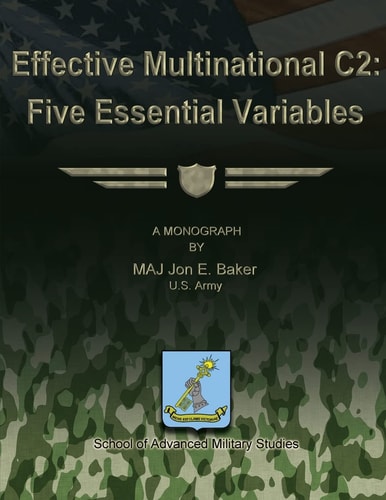
Effective Multinational C2 Five Essential Variables - US ARMY JON E. BAKER
-25% koodilla BOOKS
Toimitus 10-16 arkipäivässä
30 päivän palautusoikeus
United States armed forces have historically fought alongside allied forces, and are currently engaged in several multinational operations around the world. Most, if not all, future U.S. military peacekeeping, combat, or stability operations will continue to consist of multinational structures commonly known as coalitions or alliances. The inherent complexity of creating an effective multinational Command a ... Täydellinen kuvaus
Saatat myös pitää
 TOP
TOP

An African History of Africa: From the Dawn of Humanity to Independence
-25% koodilla BOOKS
Toimittajalla varastossa
 TOP
TOP

A People's History of the United States
-25% koodilla BOOKS
Toimittajalla varastossa
TOP

The Notebook: A History of Thinking on Paper
-25% koodilla BOOKS
Toimittajalla varastossa
TOP

Man's Search For Meaning: The classic tribute to hope from the Holocaust
-25% koodilla BOOKS
Toimittajalla varastossa
TOP

We the People: A History of the U.S. Constitution
-25% koodilla BOOKS
Toimittajalla varastossa
 TOP
TOP

The Hundred Years' War on Palestine: A History of Settler Colonial Conquest and Resistance
-25% koodilla BOOKS
Toimittajalla varastossa
TOP

A History of the World in 47 Borders: The Stories Behind the Lines on Our Maps
-25% koodilla BOOKS
Toimittajalla varastossa
 TOP
TOP


All We Say: A History of the United States in Fifteen Speeches
-25% koodilla BOOKS
Toimittajalla varastossa
TOP

From Third World to First: Singapore and the Asian Economic Boom
-25% koodilla BOOKS
Toimittajalla varastossa
TOP

Bloodlands: Europe Between Hitler and Stalin
-25% koodilla BOOKS
Toimittajalla varastossa
TOP

The Dawn of Everything: A New History of Humanity
-25% koodilla BOOKS
Toimittajalla varastossa
TOP

Chip War: The Fight for the World's Most Critical Technology
-25% koodilla BOOKS
Varastossa
TOP

A Short History of America: From Tea Party to Trump
-25% koodilla BOOKS
Toimittajalla varastossa
TOP
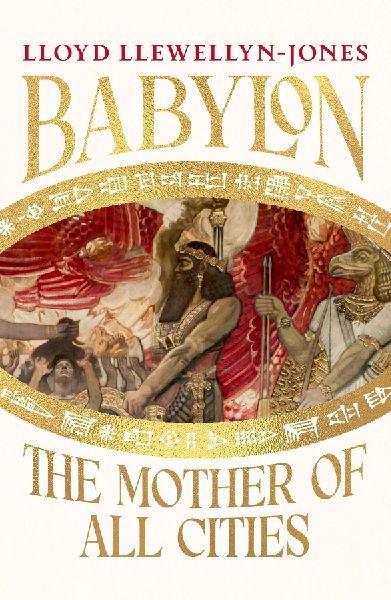
Babylon: The Mother of All Cities, from the critically acclaimed ancient historian and author of The Persians
-25% koodilla BOOKS
Toimittajalla varastossa
TOP

Man's Search For Meaning: The classic tribute to hope from the Holocaust
-25% koodilla BOOKS
Toimittajalla varastossa
TOP

The Sleepwalkers: How Europe Went to War in 1914
-25% koodilla BOOKS
Toimittajalla varastossa
TOP

Eichmann in Jerusalem: A Report on the Banality of Evil
-25% koodilla BOOKS
Toimittajalla varastossa
Kuvaus
Lisätietoja
| Kirjoittaja | US ARMY JON E. BAKER |
|---|---|
| Julkaisija | CreateSpace Independent Publishing Platform |
| Julkaisuvuosi | 2012 |
| Kannen tyyppi | Pehmeäkantinen |
| EAN | 9781479286942 |