
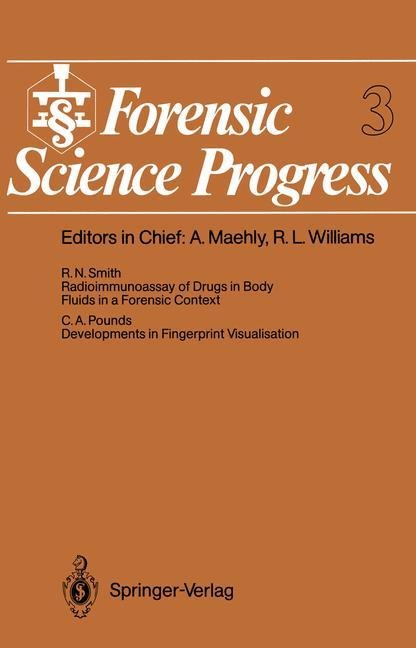
Forensic Science Progress: Volume 3 -
-35% koodilla BOOKS
Toimitus 12-18 arkipäivässä
30 päivän palautusoikeus
Competitive binding techniques such as radioimmunoassay (RIA) are widely used to measure an enormous variety of compounds in biological fluids. Current methods have 1 2 arisen from the pioneering work ofYalow and Berson in the U. S. A. and Ekins in the u. K. Much of the early development was concerned with the analysis of protein hormones, and nearly a decade passed before attention focussed also on small m ... Täydellinen kuvaus
Saatat myös pitää
 TOP
TOP
The Body Keeps the Score: Brain, Mind, and Body in the Healing of Trauma
-35% koodilla BOOKS
Toimittajalla varastossa
TOP
No Bad Parts: Healing Trauma and Restoring Wholeness with the Internal Family Systems Model
-35% koodilla BOOKS
Toimittajalla varastossa
TOP

Maybe You Should Talk to Someone: a therapist, her thearapist, and our lives revealed
-35% koodilla BOOKS
Toimittajalla varastossa
TOP

The Myth of Normal: Trauma, Illness, and Healing in a Toxic Culture
-35% koodilla BOOKS
Varastossa
TOP
Oxford Handbook of Clinical Medicine
Peter Hateley, Iain McGurgan, Ian B. Wilkinson, Tim Raine, Dearbhla Kelly, Kate Wiles
-35% koodilla BOOKS
Toimittajalla varastossa
 TOP
TOP
Harrison's Principles of Internal Medicine (Vol.1 & Vol.2)
Stephen Hauser, Joseph Loscalzo, Steven Holland, Dan Longo, J. Larry Jameson, Dennis Kasper, Carol Langford, Anthony Fauci
-35% koodilla BOOKS
Toimittajalla varastossa
TOP

The Checklist Manifesto: How to Get Things Right
-35% koodilla BOOKS
Toimittajalla varastossa
TOP
Oxford Handbook of Anaesthesia
-35% koodilla BOOKS
Toimittajalla varastossa
TOP

On Connection: 'Powerful' MATT HAIG
-35% koodilla BOOKS
Toimittajalla varastossa
TOP

How Not To Die: Discover the foods scientifically proven to prevent and reverse disease
-35% koodilla BOOKS
Toimittajalla varastossa
TOP
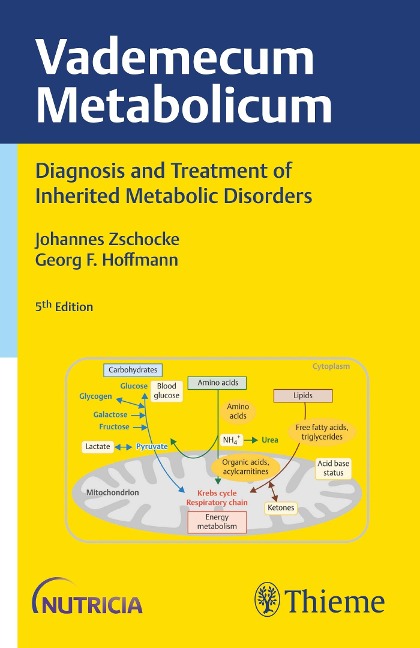
Vademecum Metabolicum: Diagnosis and Treatment of Inborn Errors of Metabolism Forword by William L. Nyhan, San Diego, USA
Johannes Zschocke, Georg F. Hoffmann
-35% koodilla BOOKS
Toimittajalla varastossa
TOP

Cellular and Molecular Immunology
Sarah Henrickson, Abul K. Abbas, Andrew H. Lichtman, Shiv Pillai
-35% koodilla BOOKS
Toimittajalla varastossa
TOP
Physics, Pharmacology and Physiology for Anaesthetists: Key Concepts for the FRCA
Matthew E. Cross, Emma V. E. Plunkett
-35% koodilla BOOKS
Toimittajalla varastossa
TOP

Being Mortal: Medicine and What Matters in the End
-35% koodilla BOOKS
Toimittajalla varastossa
TOP
Pocket Guide to Teaching for Clinical Instructors
-35% koodilla BOOKS
Toimittajalla varastossa
TOP
Oxford Handbook of Critical Care
Andrew Webb, Mervyn Singer, Alice Carter
-35% koodilla BOOKS
Toimittajalla varastossa
TOP
The Wills Eye Manual: Print + eBook with Multimedia: Office and Emergency Room Diagnosis and Treatment of Eye Disease
-35% koodilla BOOKS
Toimittajalla varastossa
TOP


Who Deserves Your Love: How to Create Boundaries to Start, Strengthen or End Any Relationship
-35% koodilla BOOKS
Toimittajalla varastossa

Kuvaus
Competitive binding techniques such as radioimmunoassay (RIA) are widely used to measure an enormous variety of compounds in biological fluids. Current methods have 1 2 arisen from the pioneering work ofYalow and Berson in the U. S. A. and Ekins in the u. K. Much of the early development was concerned with the analysis of protein hormones, and nearly a decade passed before attention focussed also on small molecules such as steroids and drugs. The potential of immunoassay methods for drug monitoring in clinical and forensic laboratories and in addict treatment programmes resulted in the commercial production of immunoassays for various therapeutic and abused drugs, making the technique available to laboratories lacking the facilities to raise their own antisera and synthesise labelled compounds. However, commercial assays are not only expensive but are restricted in range, and so it is advantageous for a forensic laboratory to have the capability to devise "in-house" immunoassays suited to its particular requirements. This chapter describes the theory and practice of RIA in forensic drug analysis. Much of the theory and some of the practice are applicable to immunoassays in which non isotopic labels are used, but such assays are not described in detail since, to date, the versatility and sensitivity of RIA have made it the immunoassay technique of choice in forensic toxicology. The particular advantages of RIA are its sensitivity and the fact that samples such as haemolysed blood can be assayed with little or no prior preparation.
Lisätietoja
| Julkaisija | Springer Berlin Heidelberg |
|---|---|
| Series | Forensic Science Progress |
| Julkaisuvuosi | 2011 |
| Kannen tyyppi | Pehmeäkantinen |
| EAN | 9783642730603 |