
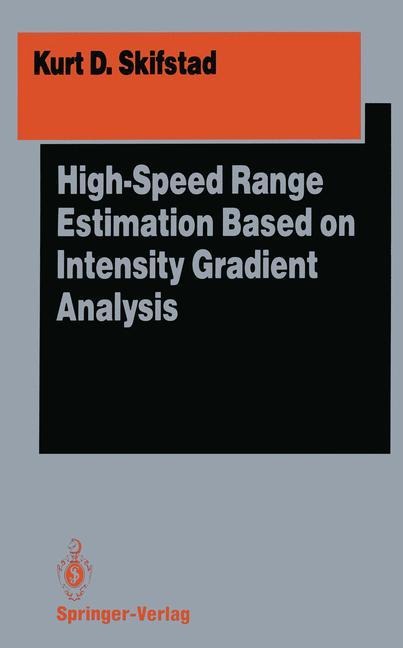
High-Speed Range Estimation Based on Intensity Gradient Analysis - Kurt D. Skifstad
-25% koodilla BOOKS
Toimitus 12-18 arkipäivässä
30 päivän palautusoikeus
A fast and reasonably accurate perception of the environment is essential for successful navigation of an autonomous agent. Although many modes of sensing are applicable to this task and have been used, vision remains the most appealing due to its passive nature, good range, and resolution. Most vision techniques to recover depth for navigation use stereo. In the last few years, researchers have started stu ... Täydellinen kuvaus
Saatat myös pitää

 TOP
TOP

INCOSE Systems Engineering Handbook
-25% koodilla BOOKS
Toimittajalla varastossa
TOP

If Anyone Builds It, Everyone Dies: The Case Against Superintelligent AI
Eliezer Yudkowsky, Nate Soares
-25% koodilla BOOKS
Toimittajalla varastossa
 TOP
TOP
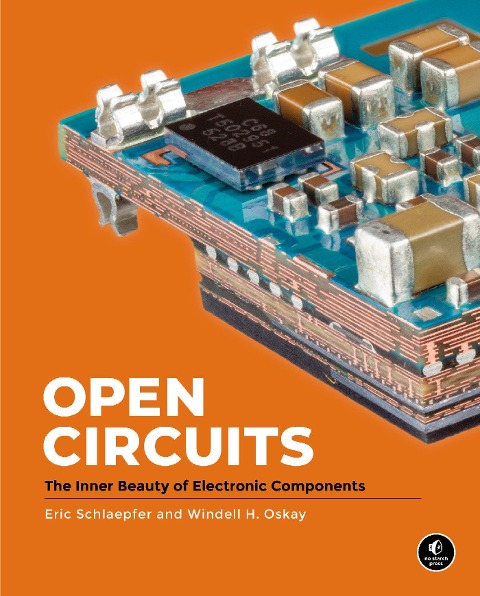
Open Circuits: The Inner Beauty of Electronic Components
Eric Schlaepfer, Windell Oskay
-25% koodilla BOOKS
Toimittajalla varastossa
TOP
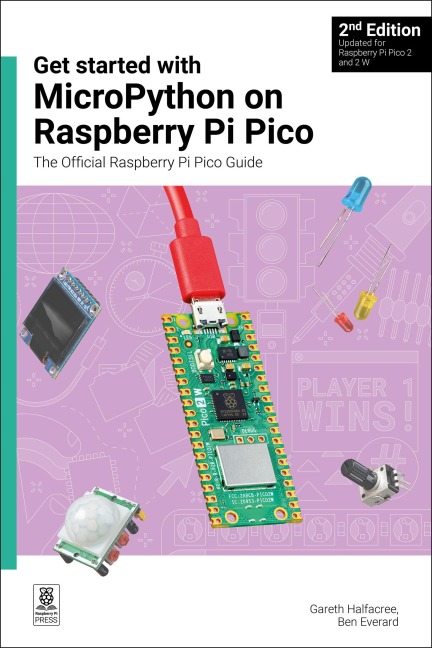
Get started with MicroPython on Raspberry Pi Pico: The Official Raspberry Pi Pico Guide
-25% koodilla BOOKS
Toimittajalla varastossa
TOP

Practical Electronics for Inventors
-25% koodilla BOOKS
Toimittajalla varastossa
TOP

Nucleo Boards Programming with the STM32CubeIDE: Hands-on in more than 50 projects
-25% koodilla BOOKS
Toimittajalla varastossa
TOP

Data-Driven Science and Engineering: Machine Learning, Dynamical Systems, and Control
Steven L. Brunton, J. Nathan Kutz
-25% koodilla BOOKS
Toimittajalla varastossa
TOP

Fundamentals of Aerodynamics ISE
Christopher Cadou, John D. Anderson
-25% koodilla BOOKS
Toimittajalla varastossa
TOP

Black Holes: The Key to Understanding the Universe
-25% koodilla BOOKS
Toimittajalla varastossa
TOP

KiCad Like A Pro - Fundamentals and Projects: Getting started with the world's best open-source PCB tool
-25% koodilla BOOKS
Toimittajalla varastossa
TOP

How To Read Water: Clues & Patterns from Puddles to the Sea
-25% koodilla BOOKS
Toimittajalla varastossa
TOP

Foundations of Flavor: The Noma Guide to Fermentation: Including Step-By-Step Information on Making and Cooking with: Koji, Kombuchas, Shoyus, Misos, Vinegars, Garums, Lacto-Ferments and black Fruits Vegetables
-25% koodilla BOOKS
Toimittajalla varastossa
TOP

Make: Electronics: Learning by Discovery: A hands-on primer for the new electronics enthusiast
-25% koodilla BOOKS
Toimittajalla varastossa
TOP

The Idea Factory: Bell Labs and the Great Age of American Innovation
-25% koodilla BOOKS
Toimittajalla varastossa
TOP

Flowers For Algernon: A Modern Literary Classic
-25% koodilla BOOKS
Toimittajalla varastossa
 TOP
TOP


Professional SMD Assembly: Practical Low-Cost Methods for Reliable PCB Production
-25% koodilla BOOKS
Toimittajalla varastossa
TOP

Blood in the Machine: The Origins of the Rebellion Against Big Tech
-25% koodilla BOOKS
Toimittajalla varastossa
Kuvaus
A fast and reasonably accurate perception of the environment is essential for successful navigation of an autonomous agent. Although many modes of sensing are applicable to this task and have been used, vision remains the most appealing due to its passive nature, good range, and resolution. Most vision techniques to recover depth for navigation use stereo. In the last few years, researchers have started studying techniques to combine stereo with the motion of the camera. Skifstad's dissertation proposes a new approach to recover depth information using known camera motion. This approach results in a robust technique for fast estimation of distances to objects in an image using only one translating camera. A very interesting aspect of the approach pursued by Skifstad is the method used to bypass the most difficult and computationally expensive step in using stereo or similar approaches for the vision-based depth esti mation. The correspondence problem has been the focus of research in most stereo approaches. Skifstad trades the correspondence problem for the known translational motion by using the fact that it is easier to detect single pixel disparities in a sequence of images rather than arbitrary disparities after two frames. A very attractive feature of this approach is that the computations required to detect single pixel disparities are local and hence can be easily parallelized. Another useful feature of the approach, particularly in naviga tion applications, is that the closer objects are detected earlier.
Lisätietoja
| Kirjoittaja | Kurt D. Skifstad |
|---|---|
| Julkaisija | Springer US |
| Series | Springer Series in Perception Engineering |
| Julkaisuvuosi | 2011 |
| Kannen tyyppi | Pehmeäkantinen |
| EAN | 9781461278016 |