
Intermediate Filaments - Normand Marceau,Anne Loranger,Stephane Gilbert

-25% koodilla BOOKS
Toimitus 15-21 arkipäivässä
30 päivän palautusoikeus
Intermediate filaments (IFs), in concert with microfilaments (MFs) and microtubules (MTs), form the cytoskeleton, and each of these fibrillar networks exhibits rather unique structural and functional characteristics. Intermediate filaments were discovered in eukaryotic cells in the late 1960s, and their name comes from the fact that their diameter is intermediate between MFs and MTs. In contrast to the latt ... Täydellinen kuvaus
Saatat myös pitää
 TOP
TOP

Determined: The Science of Life Without Free Will
-25% koodilla BOOKS
Toimittajalla varastossa
 TOP
TOP

The Rise and Fall of the Dinosaurs: A New History of a Lost World
-25% koodilla BOOKS
Toimittajalla varastossa
TOP

Factfulness: Ten Reasons We're Wrong About the World--and Why Things Are Better Than You Think
Ola Rosling, Anna Rosling Rönnlund, Hans Rosling
-25% koodilla BOOKS
Toimittajalla varastossa
TOP

Biology: A Global Approach, Global Edition
Neil Campbell, Rebecca Orr, Lisa Urry, Peter Minorsky, Michael Cain, Jane Reece, Steven Wasserman
-25% koodilla BOOKS
Toimittajalla varastossa
TOP

Six Not-so-easy Pieces: Einstein's Relativity, Symmetry, and Space-Time
Richard P. Feynman, Robert B. Leighton, Matthew Sands
-25% koodilla BOOKS
Toimittajalla varastossa
TOP

Entangled Life: How Fungi Make Our Worlds, Change Our Minds and Shape Our Futures
-25% koodilla BOOKS
Toimittajalla varastossa
TOP

The Light Eaters: How the Unseen World of Plant Intelligence Offers a New Understanding of Life on Earth
-25% koodilla BOOKS
Toimittajalla varastossa
TOP


The Age of Alchemy: How Early Innovators Shaped Modern Chemistry
-25% koodilla BOOKS
Toimittajalla varastossa
TOP
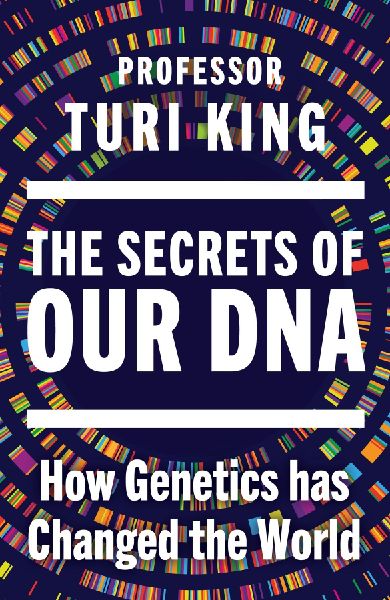
The Secrets of our DNA: How Genetics has Changed the World
-25% koodilla BOOKS
Toimittajalla varastossa
TOP

Janeway's Immunobiology
Leslie J. Berg, Kenneth Murphy, Casey Weaver
-25% koodilla BOOKS
Toimittajalla varastossa
TOP

Behave: The Biology of Humans at Our Best and Worst
-25% koodilla BOOKS
Toimittajalla varastossa
TOP

Why We Sleep: Unlocking the Power of Sleep and Dreams
-25% koodilla BOOKS
Varastossa
TOP
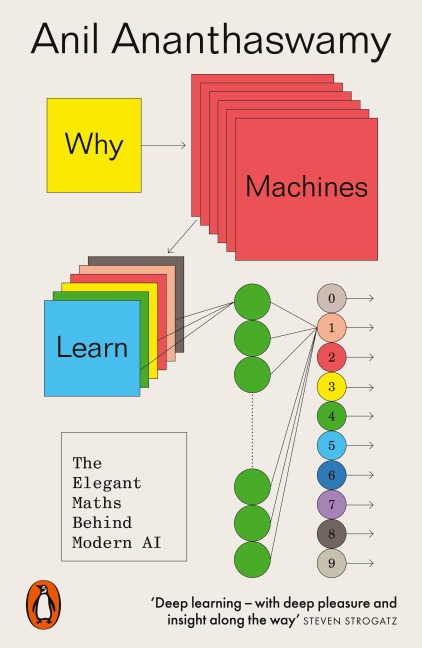
Why Machines Learn: The Elegant Maths Behind Modern AI
-25% koodilla BOOKS
Toimittajalla varastossa
TOP

Life As No One Knows It: The Physics of Life's Emergence
-25% koodilla BOOKS
Toimittajalla varastossa
TOP

The Rise and Reign of the Mammals: A New History, from the Shadow of the Dinosaurs to Us
-25% koodilla BOOKS
Toimittajalla varastossa
TOP

Learn Faster, Perform Better: A Musician's Guide to the Neuroscience of Practicing
-25% koodilla BOOKS
Toimittajalla varastossa
TOP

The Brain That Changes Itself: Stories of Personal Triumph from the Frontiers of Brain Science
-25% koodilla BOOKS
Toimittajalla varastossa
 TOP
TOP

How to Solve it: A New Aspect of Mathematical Method
-25% koodilla BOOKS
Toimittajalla varastossa
Kuvaus
Intermediate filaments (IFs), in concert with microfilaments (MFs) and microtubules (MTs), form the cytoskeleton, and each of these fibrillar networks exhibits rather unique structural and functional characteristics. Intermediate filaments were discovered in eukaryotic cells in the late 1960s, and their name comes from the fact that their diameter is intermediate between MFs and MTs. In contrast to the latter, IFs constitute a network that extends from the nuclear envelope throughout the cytoplasm, and in many cases, interact with cell surface domains involved in cell-cell and cell- matrix interactions. Several key features of their expression, assembly, structure and dynamics are highlighted in this eBook. For instance, IF proteins are encoded by several genes, which are classified into six types reflecting the tissues (cells) of origin. Moreover, IF proteins contain a conserved central ¿-helical (rod) domain flanked by N-terminal (head) and C-terminal (tail) globular domains that enables assembly of fibrous IFs exhibiting a tripartite structure. Although the rod domain is responsible for the formation of the coiled-coil framework and yields the main driving force during the IF protein assembly, the head and tail domains contribute to most of the structural heterogeneity of IF organization and undergo several types of post-translational modifications. Furthermore, the development of gene targeting methods to genetically knockout the expression of the IF genes in mice has uncovered the mechanical versus non-mechanical features of the IF networks, namely, their involvement in cell response to diverse forms of stress, growth stimulation, migration, or death insults. Finally, there is accumulating evidence revealing that the tissue and cell-type expression of IF genes reflects itself in the presence of causal or predisposition mutations responsible for numerous human tissue-specific diseases, known as IF-pathies. Table of Contents: List of Abbreviations / Introduction / IFs as a Multigene Family of Filamentous Proteins / Nuclear Lamina / IF Functional Interplay with Cell Surface Domains and Organelles / IFs and Cell Specialization / IF Relevance to Human Diseases / Conclusion / References / Author Biographies
Lisätietoja
| Kirjoittaja | Normand Marceau, Anne Loranger, Stephane Gilbert |
|---|---|
| Julkaisija | Biota Publishing |
| Julkaisuvuosi | 2014 |
| Kannen tyyppi | Pehmeäkantinen |
| EAN | 9781615045402 |