
Introduction to Random Processes - E. Wong

-25% koodilla BOOKS
Toimitus 12-18 arkipäivässä
30 päivän palautusoikeus
For most people, intuitive notions concerning probabilities are connected with relative frequencies of occurrence. For example, when we say that in toss ing a coin, the probability of its coming up "heads" is 1/2, we usually mean that in a large number of tosses, about 1/2 of the tosses will come up heads. Unfortunately, relative frequency of occurrence has proved to be an unsatis factory starting point i ... Täydellinen kuvaus
Saatat myös pitää
 TOP
TOP

Determined: The Science of Life Without Free Will
-25% koodilla BOOKS
Toimittajalla varastossa
TOP
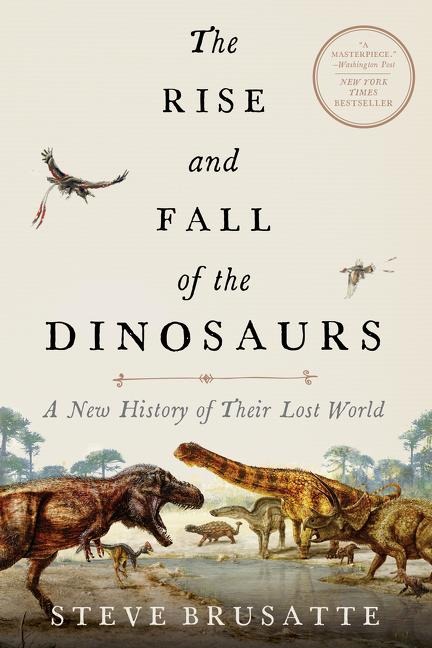
The Rise and Fall of the Dinosaurs: A New History of a Lost World
-25% koodilla BOOKS
Toimittajalla varastossa
TOP
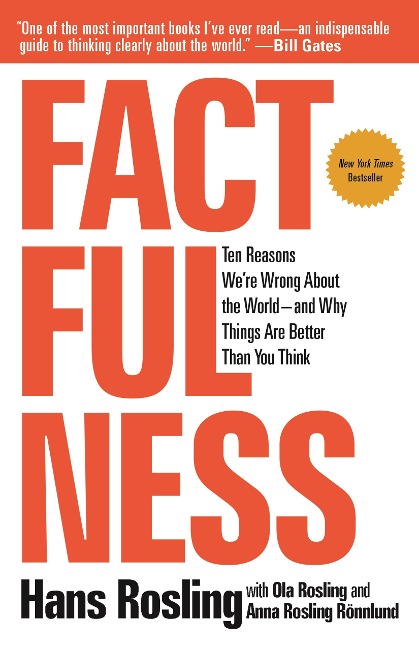
Factfulness: Ten Reasons We're Wrong About the World--and Why Things Are Better Than You Think
Ola Rosling, Anna Rosling Rönnlund, Hans Rosling
-25% koodilla BOOKS
Toimittajalla varastossa
TOP

Biology: A Global Approach, Global Edition
Neil Campbell, Rebecca Orr, Lisa Urry, Peter Minorsky, Michael Cain, Jane Reece, Steven Wasserman
-25% koodilla BOOKS
Toimittajalla varastossa
TOP

Six Not-so-easy Pieces: Einstein's Relativity, Symmetry, and Space-Time
Richard P. Feynman, Robert B. Leighton, Matthew Sands
-25% koodilla BOOKS
Toimittajalla varastossa
TOP

Entangled Life: How Fungi Make Our Worlds, Change Our Minds and Shape Our Futures
-25% koodilla BOOKS
Toimittajalla varastossa
TOP

The Light Eaters: How the Unseen World of Plant Intelligence Offers a New Understanding of Life on Earth
-25% koodilla BOOKS
Toimittajalla varastossa
 TOP
TOP


The Age of Alchemy: How Early Innovators Shaped Modern Chemistry
-25% koodilla BOOKS
Toimittajalla varastossa
TOP

The Secrets of our DNA: How Genetics has Changed the World
-25% koodilla BOOKS
Toimittajalla varastossa
TOP

Janeway's Immunobiology
Leslie J. Berg, Kenneth Murphy, Casey Weaver
-25% koodilla BOOKS
Toimittajalla varastossa
TOP

How to Solve it: A New Aspect of Mathematical Method
-25% koodilla BOOKS
Toimittajalla varastossa
TOP
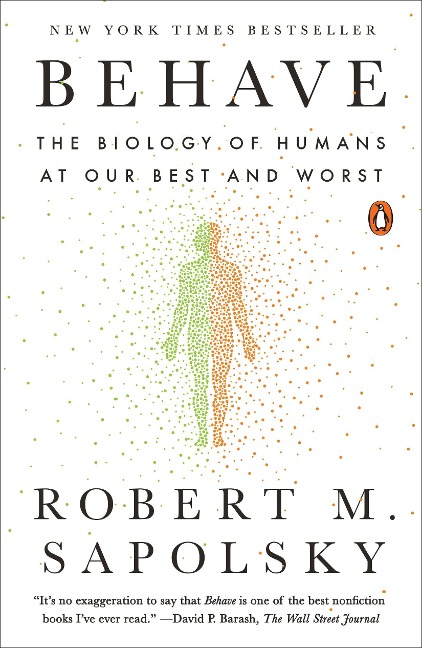
Behave: The Biology of Humans at Our Best and Worst
-25% koodilla BOOKS
Toimittajalla varastossa
TOP
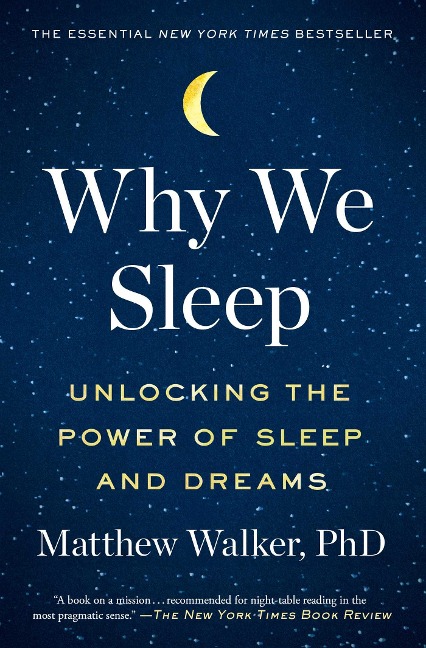
Why We Sleep: Unlocking the Power of Sleep and Dreams
-25% koodilla BOOKS
Varastossa
TOP
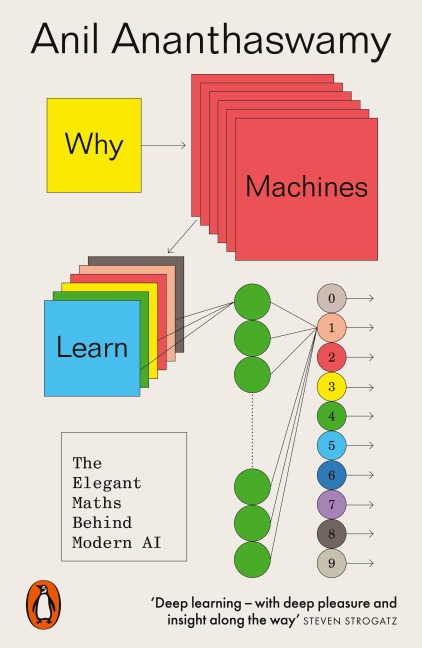
Why Machines Learn: The Elegant Maths Behind Modern AI
-25% koodilla BOOKS
Toimittajalla varastossa
TOP

Six Easy Pieces: Essentials of Physics Explained by Its Most Brilliant Teacher
Richard P. Feynman, Robert B. Leighton, Matthew Sands
-25% koodilla BOOKS
Toimittajalla varastossa
TOP

The Rise and Reign of the Mammals: A New History, from the Shadow of the Dinosaurs to Us
-25% koodilla BOOKS
Toimittajalla varastossa
TOP
Learn Faster, Perform Better: A Musician's Guide to the Neuroscience of Practicing
-25% koodilla BOOKS
Toimittajalla varastossa
TOP
The Brain That Changes Itself: Stories of Personal Triumph from the Frontiers of Brain Science
-25% koodilla BOOKS
Toimittajalla varastossa
Kuvaus
For most people, intuitive notions concerning probabilities are connected with relative frequencies of occurrence. For example, when we say that in toss ing a coin, the probability of its coming up "heads" is 1/2, we usually mean that in a large number of tosses, about 1/2 of the tosses will come up heads. Unfortunately, relative frequency of occurrence has proved to be an unsatis factory starting point in defining probability. Although there have been attempts to make frequency of occurrence part of the axiomatic structure of probability theory, the currently accepted formu1ation is one based on measure theory due to Ko1mogorov. In this formulation frequency of occurrence is an interpretation for probability rather than adefinition. This inter pretation is justified under suitab1e conditions by the 1aw of 1arge numbers. The starting point of probability theory is usua11y taken to be an experi ment the outcome of which is not fixed apriori. Some fami1iar examples inc1ude tossing a die, observation of a noise vo1tage at a fixed time, the error in measuring a physica1 parameter, and the exact touchdown time of an aircraft. Let ~ denote the set of all possib1e outcomes of an experiment. For examp1e, for the experiment of tossing one die, ~ = {1, 2, 3, 4, 5, 6}, whi1e for the touchdown time of an aircraft, ~ might be chosen to be 0 ~ t
Lisätietoja
| Kirjoittaja | E. Wong |
|---|---|
| Julkaisija | Springer US |
| Series | Springer Texts in Electrical Engineering |
| Julkaisuvuosi | 1983 |
| Kannen tyyppi | Pehmeäkantinen |
| EAN | 9780387907574 |