
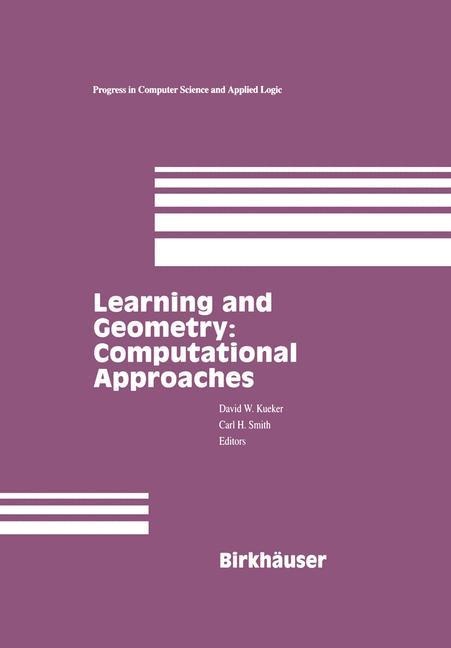
Learning and Geometry: Computational Approaches -
-35% koodilla BOOKS
Toimitus 12-18 arkipäivässä
30 päivän palautusoikeus
The field of computational learning theory arose out of the desire to for mally understand the process of learning. As potential applications to artificial intelligence became apparent, the new field grew rapidly. The learning of geo metric objects became a natural area of study. The possibility of using learning techniques to compensate for unsolvability provided an attraction for individ uals with an i ... Täydellinen kuvaus
Saatat myös pitää
 TOP
TOP

Determined: The Science of Life Without Free Will
-35% koodilla BOOKS
Toimittajalla varastossa
TOP

The Light Eaters: How the Unseen World of Plant Intelligence Offers a New Understanding of Life on Earth
-35% koodilla BOOKS
Toimittajalla varastossa
 TOP
TOP
Why We Sleep: Unlocking the Power of Sleep and Dreams
-35% koodilla BOOKS
Varastossa
TOP
The Rise and Fall of the Dinosaurs: A New History of a Lost World
-35% koodilla BOOKS
Toimittajalla varastossa
TOP

Biology: A Global Approach, Global Edition
Neil Campbell, Rebecca Orr, Lisa Urry, Peter Minorsky, Michael Cain, Jane Reece, Steven Wasserman
-35% koodilla BOOKS
Toimittajalla varastossa
TOP

Six Not-so-easy Pieces: Einstein's Relativity, Symmetry, and Space-Time
Richard P. Feynman, Robert B. Leighton, Matthew Sands
-35% koodilla BOOKS
Toimittajalla varastossa
TOP

Explaining AuDHD: The expert-led guide to Autism and ADHD Co-concurrence
-35% koodilla BOOKS
Loppu
TOP


The Age of Alchemy: How Early Innovators Shaped Modern Chemistry
-35% koodilla BOOKS
Toimittajalla varastossa
TOP
Factfulness: Ten Reasons We're Wrong About the World--and Why Things Are Better Than You Think
Ola Rosling, Anna Rosling Rönnlund, Hans Rosling
-35% koodilla BOOKS
Toimittajalla varastossa
TOP
Why Machines Learn: The Elegant Maths Behind Modern AI
-35% koodilla BOOKS
Toimittajalla varastossa
TOP
Seven Brief Lessons on Physics
-35% koodilla BOOKS
Toimittajalla varastossa
TOP

Entangled Life: How Fungi Make Our Worlds, Change Our Minds and Shape Our Futures
-35% koodilla BOOKS
Toimittajalla varastossa
TOP

Life As No One Knows It: The Physics of Life's Emergence
-35% koodilla BOOKS
Toimittajalla varastossa
TOP
The Rise and Reign of the Mammals: A New History, from the Shadow of the Dinosaurs to Us
-35% koodilla BOOKS
Toimittajalla varastossa
TOP

Molecular Biology of the Cell
David Morgan, Alexander Johnson, Rebecca Heald, Bruce Alberts, Martin Raff
-35% koodilla BOOKS
Toimittajalla varastossa
TOP
Learn Faster, Perform Better: A Musician's Guide to the Neuroscience of Practicing
-35% koodilla BOOKS
Toimittajalla varastossa
TOP

Janeway's Immunobiology
Leslie J. Berg, Kenneth Murphy, Casey Weaver
-35% koodilla BOOKS
Toimittajalla varastossa
TOP

The Road to Reality: A Complete Guide to the Laws of the Universe
-35% koodilla BOOKS
Toimittajalla varastossa
TOP
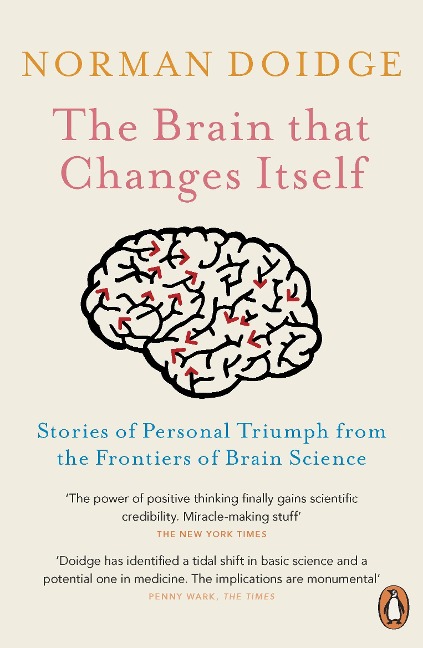
The Brain That Changes Itself: Stories of Personal Triumph from the Frontiers of Brain Science
-35% koodilla BOOKS
Toimittajalla varastossa
Kuvaus
The field of computational learning theory arose out of the desire to for mally understand the process of learning. As potential applications to artificial intelligence became apparent, the new field grew rapidly. The learning of geo metric objects became a natural area of study. The possibility of using learning techniques to compensate for unsolvability provided an attraction for individ uals with an immediate need to solve such difficult problems. Researchers at the Center for Night Vision were interested in solving the problem of interpreting data produced by a variety of sensors. Current vision techniques, which have a strong geometric component, can be used to extract features. However, these techniques fall short of useful recognition of the sensed objects. One potential solution is to incorporate learning techniques into the geometric manipulation of sensor data. As a first step toward realizing such a solution, the Systems Research Center at the University of Maryland, in conjunction with the Center for Night Vision, hosted a Workshop on Learning and Geometry in January of 1991. Scholars in both fields came together to learn about each others' field and to look for common ground, with the ultimate goal of providing a new model of learning from geometrical examples that would be useful in computer vision. The papers in the volume are a partial record of that meeting.
Lisätietoja
| Julkaisija | Birkhäuser Boston |
|---|---|
| Series | Progress in Computer Science and Applied Logic |
| Julkaisuvuosi | 2011 |
| Kannen tyyppi | Pehmeäkantinen |
| EAN | 9781461286462 |