
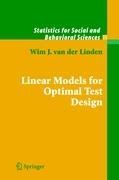
Linear Models for Optimal Test Design - Wim J. van der Linden
-35% koodilla BOOKS
Toimitus 12-18 arkipäivässä
30 päivän palautusoikeus
Over my nearly forty years of teaching and conducting research in the ?eld of psychometric methods, I have seen a number of major technical advances that respond to pressing educational and psychological measu- mentproblems. Thedevelopmentofcriterion-referencedassessmentwasthe ?rst, beginning in the late 1960s with the important work of Robert Glaser and Jim Popham, in response to the need for assessments t ... Täydellinen kuvaus
Saatat myös pitää
 TOP
TOP

The Culture Map: Breaking Through the Invisible Boundaries of Global Business
-35% koodilla BOOKS
Varastossa
TOP

Atomic Habits: An Easy & Proven Way to Build Good Habits & Break Bad Ones
-35% koodilla BOOKS
Varastossa
TOP


The Nord Stream Conspiracy: The Inside Story of the Explosions That Shook the World
-35% koodilla BOOKS
Toimittajalla varastossa
TOP

Women Who Run with the Wolves: Myths and Stories of the Wild Woman Archetype
Clarissa Pinkola Estés, Clarissa Pinkola Estes
-35% koodilla BOOKS
Toimittajalla varastossa
TOP

Sapiens: A Brief History of Humankind
-35% koodilla BOOKS
Toimittajalla varastossa
TOP

How Democracies Die
Steven Levitsky, Daniel Ziblatt
-35% koodilla BOOKS
Toimittajalla varastossa
 TOP
TOP

Prisoners of Geography: Updated 10th Anniversary Edition: Ten Maps That Tell You Everything You Need To Know About Global Politics
-35% koodilla BOOKS
Toimittajalla varastossa
TOP

Classic Football Shirts
Classic Football Shirts, Rory Smith
-35% koodilla BOOKS
Toimittajalla varastossa
 TOP
TOP

The Whole-Brain Child: 12 Revolutionary Strategies to Nurture Your Child's Developing Mind
Daniel J. Siegel, Tina Payne Bryson
-35% koodilla BOOKS
Toimittajalla varastossa
 TOP
TOP

Everything I Know About Love: Now a Major BBC One Series
-35% koodilla BOOKS
Varastossa
TOP

Braiding Sweetgrass: Indigenous Wisdom, Scientific Knowledge and the Teachings of Plants
-35% koodilla BOOKS
Toimittajalla varastossa
TOP

The Unabridged Journals of Sylvia Plath
-35% koodilla BOOKS
Toimittajalla varastossa
TOP

To Kill a Mockingbird. 60th Anniversary Edition
-35% koodilla BOOKS
Toimittajalla varastossa
 TOP
TOP
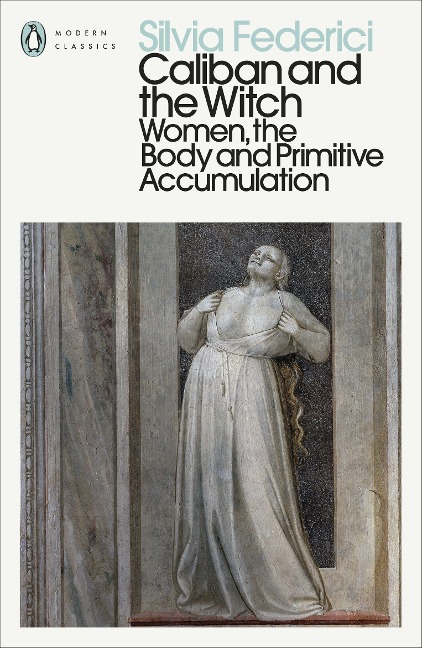
Caliban and the Witch: Women, the Body and Primitive Accumulation
-35% koodilla BOOKS
Toimittajalla varastossa
TOP

Breaking Through: My Life in Science
-35% koodilla BOOKS
Toimittajalla varastossa
Kuvaus
Over my nearly forty years of teaching and conducting research in the ?eld of psychometric methods, I have seen a number of major technical advances that respond to pressing educational and psychological measu- mentproblems. Thedevelopmentofcriterion-referencedassessmentwasthe ?rst, beginning in the late 1960s with the important work of Robert Glaser and Jim Popham, in response to the need for assessments that considered candidate performance in relation to a well-de?ned body of knowledge and skills rather than in relation to a norm group. The development of criterion-referenced testing methodology with a focus on decision-theoretic concepts and methods, content validity, standard-setting, and the recog- tionofthemeritsofbothcriterion-norm-referencedandcriterion-referenced assessments has tremendously in?uenced current test theory and testing . The second major advance was the introduction of item response-theory (IRT) and associated models and their applications to replace classical test theory (CTT) and related practices. Beginning slowly in the 1940s and 1950s with the pioneering work of Frederic Lord, Allan Birnbaum, and GeorgRasch,bythe1970sthemeasurementjournalswerefullofimportant research studies describing new IRT models, technical advances in model parameter estimation and model ?t, and research on applications of IRT models to equating, test development, the detection of potentially biased test items, and adaptive testing. The overall goal has been to improve and expand measurement practices by overcoming several shortcomings of cl- sicaltesttheory:dependenceoftest-itemstatisticsandreliabilityestimates on examinee samples, dependence of examinee true score estimates on the particular choices of test items, and the limitation in CTT of modeling ex-viii Foreword aminee performance at the test level rather than at the item level.
Lisätietoja
| Kirjoittaja | Wim J. van der Linden |
|---|---|
| Julkaisija | Springer US |
| Series | Statistics for Social and Behavioral Sciences |
| Julkaisuvuosi | 2010 |
| Kannen tyyppi | Pehmeäkantinen |
| EAN | 9781441919038 |