
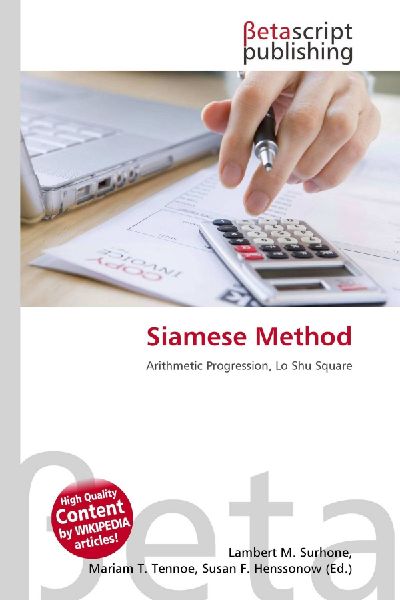
Siamese Method: Arithmetic Progression, Lo Shu Square -

-25% koodilla BOOKS
Toimitus 15-21 arkipäivässä
30 päivän palautusoikeus
Please note that the content of this book primarily consists of articles available from Wikipedia or other free sources online. The Siamese method, or De la Loubère method, is a simple method to construct any size of n-odd magic squares (i.e. number squares in which the sums of all rows, columns and diagonals are identical). The method was brought to France in 1688 by the French mathematician and diplomat S ... Täydellinen kuvaus
Saatat myös pitää
 TOP
TOP

An African History of Africa: From the Dawn of Humanity to Independence
-25% koodilla BOOKS
Toimittajalla varastossa
 TOP
TOP

A People's History of the United States
-25% koodilla BOOKS
Toimittajalla varastossa
TOP

The Notebook: A History of Thinking on Paper
-25% koodilla BOOKS
Toimittajalla varastossa
TOP

The Dawn of Everything: A New History of Humanity
-25% koodilla BOOKS
Toimittajalla varastossa
TOP

A History of the World in 47 Borders: The Stories Behind the Lines on Our Maps
-25% koodilla BOOKS
Toimittajalla varastossa
TOP

Man's Search For Meaning: The classic tribute to hope from the Holocaust
-25% koodilla BOOKS
Toimittajalla varastossa
TOP

We the People: A History of the U.S. Constitution
-25% koodilla BOOKS
Toimittajalla varastossa
TOP

The Hundred Years' War on Palestine: A History of Settler Colonial Conquest and Resistance
-25% koodilla BOOKS
Toimittajalla varastossa
 TOP
TOP

All We Say: A History of the United States in Fifteen Speeches
-25% koodilla BOOKS
Toimittajalla varastossa
TOP

From Third World to First: Singapore and the Asian Economic Boom
-25% koodilla BOOKS
Toimittajalla varastossa
TOP

Bloodlands: Europe Between Hitler and Stalin
-25% koodilla BOOKS
Toimittajalla varastossa
TOP

Chip War: The Fight for the World's Most Critical Technology
-25% koodilla BOOKS
Varastossa
TOP

A Short History of America: From Tea Party to Trump
-25% koodilla BOOKS
Toimittajalla varastossa
TOP
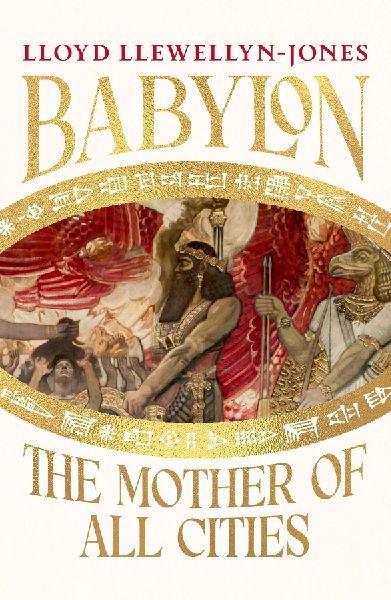
Babylon: The Mother of All Cities, from the critically acclaimed ancient historian and author of The Persians
-25% koodilla BOOKS
Toimittajalla varastossa
TOP

Man's Search For Meaning: The classic tribute to hope from the Holocaust
-25% koodilla BOOKS
Toimittajalla varastossa
TOP

The Sleepwalkers: How Europe Went to War in 1914
-25% koodilla BOOKS
Toimittajalla varastossa
TOP

Eichmann in Jerusalem: A Report on the Banality of Evil
-25% koodilla BOOKS
Toimittajalla varastossa
Kuvaus
Lisätietoja
| Julkaisija | OmniScriptum |
|---|---|
| Julkaisuvuosi | 2026 |
| Kannen tyyppi | Pehmeäkantinen |
| EAN | 9786131178498 |