
Somewhere between everything and nothing - Stefan Krauss
-35% koodilla BOOKS
Toimitus 15-21 arkipäivässä
30 päivän palautusoikeus
Essay from the year 2004 in the subject Philosophy - Miscellaneous, grade: distinction+, Murdoch University (Institute for Sustainability and Technology Policy), course: Policy, Technology, Democracy, language: English, abstract: Formatting the statement: How to deal with If-Questions The statement "Sustainability can be achieved by developing smarter technologies" can be seen as an affirmative answer to th ... Täydellinen kuvaus
Saatat myös pitää
 TOP
TOP
How Not to Be Wrong: The Power of Mathematical Thinking
-35% koodilla BOOKS
Toimittajalla varastossa
 TOP
TOP
The Daily Stoic: 366 Meditations on Wisdom, Perseverance, and the Art of Living: Featuring new translations of Seneca, Epictetus, and Marcus Aurelius
Stephen Hanselman, Ryan Holiday
-35% koodilla BOOKS
Varastossa
TOP

Ikigai: The Japanese secret to a long and happy life
Francesc Miralles, Héctor García
-35% koodilla BOOKS
Varastossa
TOP
The Artist's Way: A Spiritual Path to Higher Creativity
-35% koodilla BOOKS
Toimittajalla varastossa
TOP

A Little History of Philosophy
-35% koodilla BOOKS
Toimittajalla varastossa
 TOP
TOP

The Power of Now: A Guide to Spiritual Enlightenment
-35% koodilla BOOKS
Varastossa
TOP

The Holy Bible - King James Version (KJV): Popular Gift & Award Black Leatherette Edition
-35% koodilla BOOKS
Toimittajalla varastossa
TOP


Original Sin: The Genetics of Wrongdoing, the Problem of Blame and the Future of Forgiveness
-35% koodilla BOOKS
Toimittajalla varastossa
TOP
The Art of War & Other Classics of Eastern Philosophy
Mencius, Lao-Tzu, Confucius, Sun Tzu
-35% koodilla BOOKS
Toimittajalla varastossa
TOP

The Reed of God: Mary, Virgin and Mother
-35% koodilla BOOKS
Toimittajalla varastossa
TOP
Discourses and Selected Writings
-35% koodilla BOOKS
Toimittajalla varastossa
TOP

Antifragile: Things That Gain from Disorder
-35% koodilla BOOKS
Toimittajalla varastossa
 TOP
TOP
The 5 Levels of Leadership: Proven Steps to Maximize Your Potential
-35% koodilla BOOKS
Toimittajalla varastossa
TOP

The Café on the Edge of the World: A Story About the Meaning of Life
-35% koodilla BOOKS
Toimittajalla varastossa
TOP
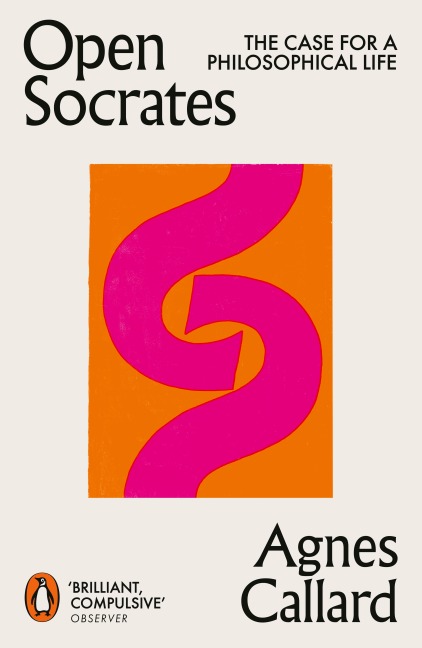
Open Socrates: The Case for a Philosophical Life
-35% koodilla BOOKS
Toimittajalla varastossa
TOP

Thus Spoke Zarathustra: A Book for Everyone and No One
-35% koodilla BOOKS
Toimittajalla varastossa

Kuvaus
Essay from the year 2004 in the subject Philosophy - Miscellaneous, grade: distinction+, Murdoch University (Institute for Sustainability and Technology Policy), course: Policy, Technology, Democracy, language: English, abstract: Formatting the statement: How to deal with If-Questions The statement "Sustainability can be achieved by developing smarter technologies" can be seen as an affirmative answer to the following question: [1] If: Sustainability can be achieved by developing smarter technologies? If- or respectively decision-demanding-questions allow two possibilities to answer: an affirmative and a negative one. Someone who wants to claim the proposition of the question is obliged to give a proof. Someone who wants to dispute the proposition of the question is obliged to give a refutation. To identify what such a proof or rather a refutation has to contain, it is helpful to note down the question again to show the logical structure more clearly: Is it the case, that [1¿] If developing smarter technologies then Sustainability can be achieved? Obviously it concerns an implication clause, which demands further propositions that allow the transition from the antecedent to the succedent. A tautological transition can be constructed neither taking any scientific ¿proofs¿ into consideration, nor making any vague prognoses. Only the arbitrary meaning of the term ¿smart¿ has to be fixed in a goal-directed way: [2] A technology is smart i f f1 it meets the needs of the present without compromising the ability of future generations to meet their own needs. Making use of the rule of complete substitution of the definiendum and the definiens we get a tautology by putting line [2] in line [1¿] and taking the Brundland definition for Sustainability. Someone who accepts the definition [2] and the Brundland one is forced to agree with the statement simply because of locical reasons (? 6). This finding, indeed, leaves one unsatisfied. Thus, further investigations have to be undertaken. Although explications are often given by scientists, it seems to me particulary characteristic of philosophical work that a great part of it is devoted to proposing and discussing explications of certain basic general concepts.
Lisätietoja
| Kirjoittaja | Stefan Krauss |
|---|---|
| Julkaisija | GRIN Verlag |
| Julkaisuvuosi | 2014 |
| Kannen tyyppi | Pehmeäkantinen |
| EAN | 9783656687030 |